Condo Balcony Rules in Florida: What You Can and Cannot Do
The rules that govern your balcony are written in four documents most owners have never opened. Here is what they usually say, and how to find out what yours says.

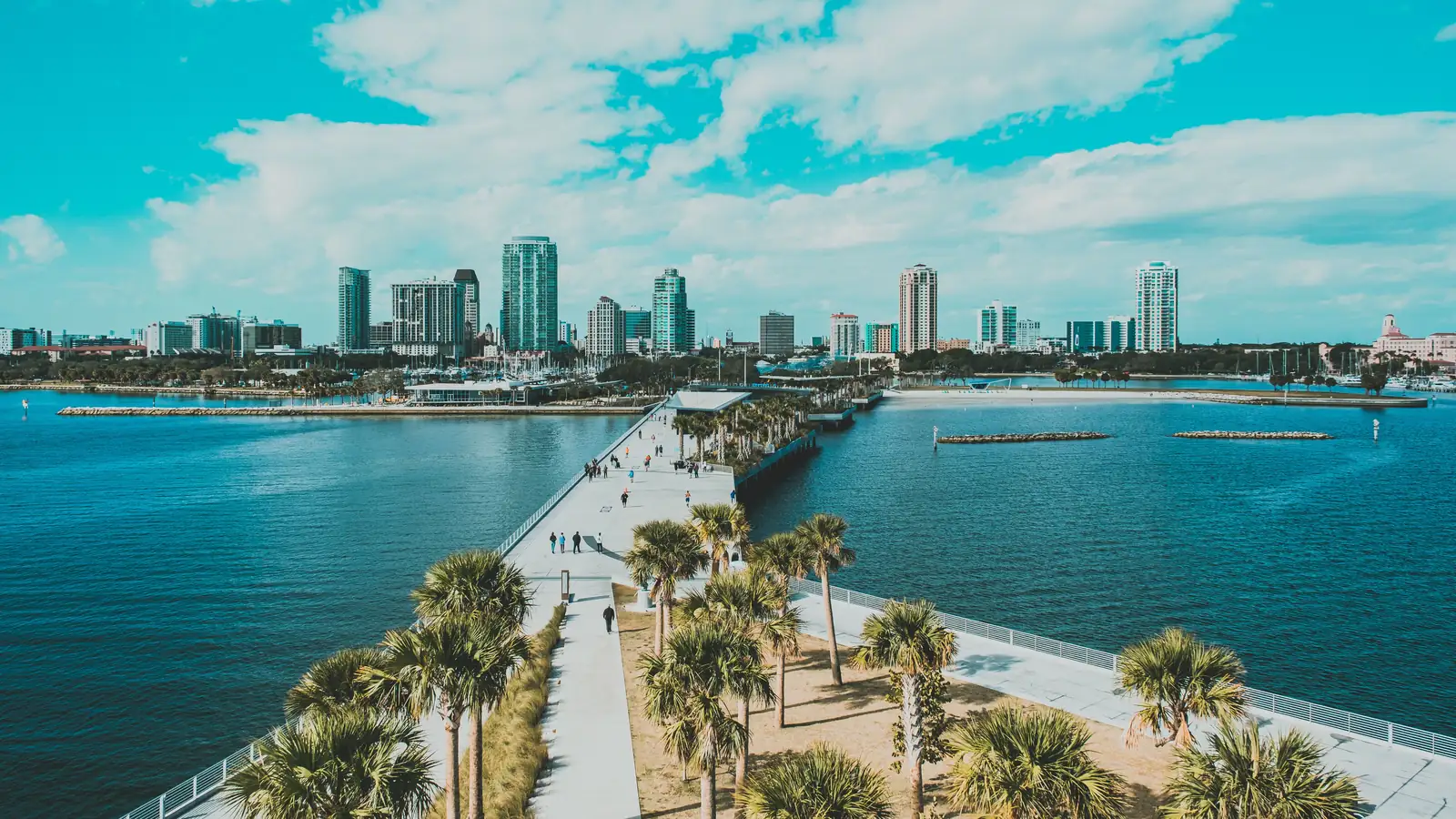
Condo balcony rules in Florida come from your declaration first, then the bylaws, then whatever the board has adopted since. In downtown St. Petersburg and Tampa towers the usual targets are storage, grills, anything hung over the rail and anything bonded to the slab, and many buildings ban pressure washing outright. Your own declaration decides, so read that before you buy, build or clean anything.
Where do condo balcony rules actually come from?
Four documents, in a fixed order of authority. The declaration of condominium comes first, then the articles of incorporation, then the bylaws, and last the rules and regulations the board adopts. A board rule cannot override the declaration, so when a violation letter cites only a rule, read the declaration section that rule claims to rest on before you comply or argue.
Above all four sits Chapter 718 of the Florida Statutes, the Condominium Act. It sets the outer limits on what an association may do, including the notice and hearing process it has to follow before fining anyone.
This is general information about how Florida condominium documents usually work, not legal advice. Your declaration governs, and a Florida community association attorney can read it with you.
What can you keep on a Florida condo balcony?
Furniture, plants and a few decorative items, in most buildings. Storage, bicycles, boxes, laundry racks and anything visible above the rail line are the usual prohibitions. Declarations draw the line between outdoor living space and an extra closet.
The second reason is wind. On the 20th floor a chair cushion in a tropical storm becomes a projectile, so many buildings require owners who leave for the summer to bring balcony furniture inside before hurricane season, which runs from June 1 to November 30.
| Item | Usually allowed | Why the board cares |
|---|---|---|
| Patio furniture | Yes, within the rail line | Wind load in a storm |
| Potted plants | Yes, on saucers | Water draining onto the unit below |
| Bicycles, boxes, spare furniture | No | Reads as storage, blocks egress |
| Rail-hung planters and towels | Usually no | Falling objects, uniform appearance |
| Charcoal and gas grills | No | Florida Fire Prevention Code |
| Bonded tile or coatings | Written approval only | Alters association waterproofing |
| Satellite dishes, cameras, hooks | Written approval only | Penetrates the building envelope |
Typical restrictions in Florida condominium declarations and rules. Yours governs.
Are plants allowed on a condo balcony?
Yes, in most buildings, on one condition: water must not leave your balcony. A pot without a saucer drains onto the balcony below, and your neighbor’s wet cushions turn a plant into a violation letter. Boards treat hanging baskets and rail-mounted planters more strictly, because anything attached to the rail can fall eleven floors.
Can you use a grill on a condo balcony in Florida?
Not a charcoal or gas one. The Florida Fire Prevention Code, which adopts NFPA 1, bars any hibachi, grill or similar cooking device from being used on a balcony of any building other than a one- or two-family home, and bars storing one there. It also rules out using one under an overhang or within 10 feet of the building.

Florida added one exception of its own: a listed electric tabletop grill with no more than 200 square inches of cooking surface. Your declaration or rules can still ban that one, so check before you buy.
Listed electric portable, tabletop grills, not to exceed 200 square inches of cooking surface, or other similar apparatus shall be permitted.
Source: Florida Fire Prevention Code, 8th Edition, NFPA 1 section 10.10.6.1.1 (Florida amendment), Division of State Fire MarshalAre rugs and balcony flooring allowed?
Loose-laid rugs are generally fine. Anything bonded to the slab needs written approval, because the waterproofing under your balcony is usually the association’s to maintain and a coating changes it. Tile, epoxy and outdoor carpet all count, whatever a contractor tells you.
Watch what happens under a rug. A rubber backing holds water against the slab in Tampa Bay humidity and can leave a dark rectangle of mildew after one wet season.
Maintenance of the common elements is the responsibility of the association, except for any maintenance responsibility for limited common elements assigned to the unit owner by the declaration.
Source: Florida Statutes s. 718.113(1), The Florida SenateCan you dry laundry or hang towels on the rail?
Usually not on the rail. Section 163.04 of the Florida Statutes stops a declaration from banning clotheslines, but the same section says it does not apply to patio railings in condominiums, cooperatives or apartments. Your association can keep towels and laundry off the railing, and many declarations do.
A freestanding drying rack below the rail line is the usual compromise, though some rules ban drying anything outside.
Not sure whether your building would approve a cleaner? Send us the building name and we will tell you what they usually ask for.
Text your building nameWhat decor and lighting will a board object to?
Anything that changes the exterior appearance of the building or attaches to it. String lights, hooks drilled into the ceiling, privacy screens on the rail and painted surfaces are common objections. Flags are the exception written into the law: section 718.113(4) lets you display one portable, removable United States flag regardless of the rules, and official armed forces flags up to 4½ by 6 feet on six named holidays.
Freestanding items that stay below the rail line give a board much less to object to. The test is simple: can somebody standing on Beach Drive or Bayshore Boulevard see it, and does it look different from the balcony beside yours.
Can you smoke on your own balcony?
Your building’s documents decide, because no Florida statute does. The Florida Clean Indoor Air Act exempts private residences, and Chapter 718 never mentions smoking, so a balcony smoking ban has to come from your declaration or your association’s rules. Where one exists, the association enforces it like any other rule, with notice, a hearing and fines.
What are the rules on cleaning and washing a balcony?
Many high-rise declarations and rules prohibit pressure washing from a balcony, and some prohibit hosing altogether. The objection is water leaving your balcony: runoff lands on the units below, streaks the face of the building, and carries whatever it lifted onto somebody else’s furniture. We wrote a longer piece on why buildings ban pressure washing and what works instead.
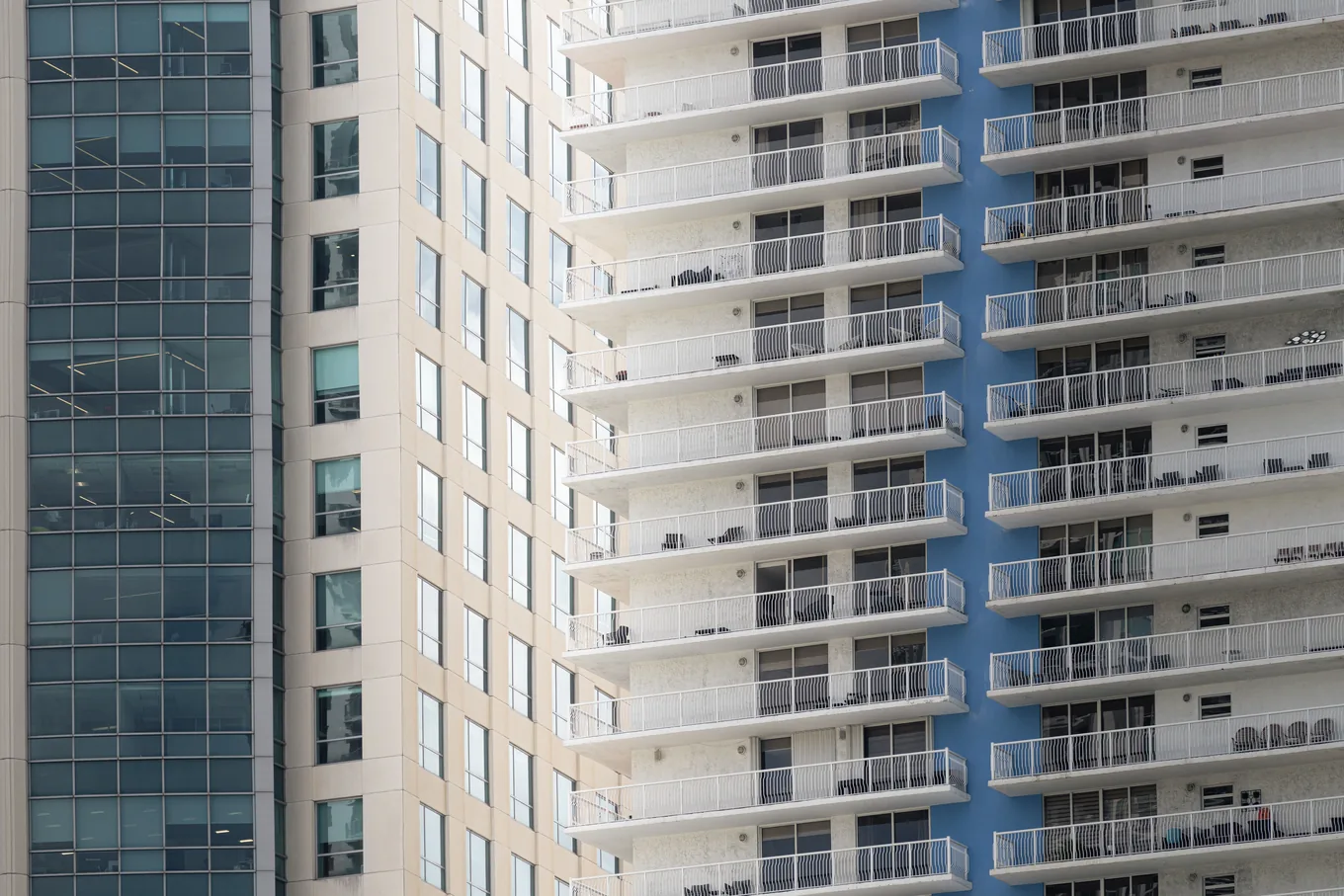
Hand cleaning with contained water avoids the problem those rules exist to stop, which is why our method uses no hose and no pressure washer, and the dirty water leaves in a bucket. Our condo balcony cleaning page covers buildings that want paperwork first.
How did the milestone inspection law change balcony rules?
It made the balcony a structural question. Section 553.899 of the Florida Statutes requires every condominium and cooperative building three habitable stories or taller to have a milestone inspection by December 31 of the year it turns 30, then every 10 years. The local building department can move the first one to 25 years, so ask which applies if you own in a bayfront tower in downtown St. Petersburg or downtown Tampa.
The local enforcement agency may determine that local circumstances, including environmental conditions such as proximity to salt water as defined in s. 379.101, require that a milestone inspection must be performed by December 31 of the year in which the building reaches 25 years of age, based on the date the certificate of occupancy for the building was issued, and every 10 years thereafter.
Source: Florida Statutes s. 553.899(3)(b), The Florida SenatePhase one is an architect’s or engineer’s visual examination of the major structural components, and phase two follows only if it finds substantial structural deterioration. If your building has a report, read what it says about the balconies before you add heavy planters, tile or a coating.
| Requirement | Which buildings | When |
|---|---|---|
| Milestone inspection, phase one | Condo and co-op buildings three habitable stories and up | Year 30, then every 10 years; year 25 if the local building department requires it |
| Milestone inspection, phase two | Buildings where phase one finds substantial structural deterioration | After the phase one finding |
| Structural integrity reserve study | Condo buildings three habitable stories and up | At least every 10 years, covering structure, waterproofing, roof, windows and building systems |
Section 553.899 sets the inspection and section 718.112(2)(g) the reserve study. Both reach the balcony.
How do you read your own condo documents?
Open the declaration and search it for four words: balcony, terrace, limited and alteration. That takes ten minutes. If your association manages 25 or more units, section 718.111(12)(g) has required it since January 1, 2026 to post the declaration, bylaws, articles and rules in an owner-only area of its website or app, so start there.
A condominium only exists once its declaration is recorded, so the county has a copy too: search the official records of the Pinellas County Clerk or the Hillsborough County Clerk. Then read the rules separately, because a board can adopt new ones long after the declaration was recorded. If the two disagree, the declaration wins.
How do you get a cleaning vendor approved?
Ask the management company for its vendor requirements before you book anybody. Expect to be asked for a certificate of insurance naming the association as an additional insured, a description of the method, and sometimes a scheduled window so the front desk knows who is coming up.
The method matters as much as the paperwork. Section 718.303 lets an association levy fines when an owner’s invitee fails to follow the rules, so a violation by a contractor you let in with a pressure washer can come back to you. On a recurring plan the paperwork is done once.
Your balcony is usually a common element only your unit may use. The association maintains the structure and answers for the look of the building, so it writes rules about both, and your declaration says which ones your building adopted.
Frequently asked questions
Who makes the rules about my condo balcony?
Four documents do, in a fixed order: the declaration, the articles, the bylaws, and the board rules. The declaration outranks the rest, so a board rule that contradicts it is unenforceable. Chapter 718 of the Florida Statutes sits above all four.
Is my balcony mine or the building’s?
In most Florida condominiums the balcony is a limited common element. It belongs to the common elements, in which every unit owner holds an undivided share, and the declaration reserves it for your unit alone. Some declarations make the balcony part of the unit instead, and who maintains it is a separate question the declaration also answers.
Can the association tell me to remove my furniture?
Yes, if the declaration or the rules restrict what may be kept on a limited common element, and many do. The usual targets are storage, anything visible above the rail line, and anything that becomes a projectile in a storm.
Can I pressure wash my own balcony in Florida?
Rarely in a high-rise. Many declarations and rules prohibit it, and the objection is usually the water leaving your balcony rather than the pressure, because runoff lands on the units below and on the face of the building. A building that allows it may still require a contained system and a certificate of insurance.
Do balcony rules change when a building has its milestone inspection?
They can, if the report leads the board to adopt new ones. Section 553.899 of the Florida Statutes requires a milestone inspection of condo and co-op buildings three habitable stories and taller by the end of the year they turn 30, then every 10 years, and the local building department can require the first one at 25. Balcony slabs are part of the structure it examines.
Can I put outdoor flooring or tile over my balcony?
Usually not without written approval. Anything bonded to the slab changes the waterproofing the association usually maintains, and it can complicate a later structural inspection. Loose-laid tiles and rugs are treated more leniently, though they still have to clear the drain.
What happens if I ignore a balcony violation letter?
The association can fine up to $100 per violation and $1,000 in total, counting a continuing violation by the day, but only after at least 14 days’ written notice and a chance to be heard by a committee of at least three people the board appoints who are not officers, directors or employees. A suspension of use rights cannot cover a limited common element reserved for your unit alone.
Do renters have to follow the same balcony rules?
Renters follow the same balcony rules as owners. The rules run with the unit rather than with the owner, and a lease usually passes them to the tenant. Section 718.303 lets the association levy fines when an occupant fails to comply, with written notice to the owner as well as the tenant.
Sources
- The Florida Senate. Section 718.113, Florida Statutes (2026): maintenance of the common elements, flags. flsenate.gov
- The Florida Senate. Section 553.899, Florida Statutes (2026): milestone structural inspections for condominium and cooperative buildings. flsenate.gov
- The Florida Senate. Section 718.112, Florida Statutes (2026): paragraph (2)(g), the structural integrity reserve study. flsenate.gov
- The Florida Senate. Section 718.303, Florida Statutes (2026): fines, suspensions, notice and hearing. flsenate.gov
- The Florida Senate. Section 718.111, Florida Statutes (2026): paragraph (12)(g), association websites and posted documents. flsenate.gov
- The Florida Senate. Section 163.04, Florida Statutes: energy devices based on renewable resources, including clotheslines. flsenate.gov
- Florida Division of State Fire Marshal. Florida Fire Prevention Code, 8th Edition (NFPA 1, 2021, with Florida amendments), sections 10.10.6.1 to 10.10.6.3. myfloridacfo.com
- Florida Department of Business and Professional Regulation. Division of Florida Condominiums, Timeshares and Mobile Homes. myfloridalicense.com