How Often Should You Clean a Balcony in Florida?
Twice a year suits most balconies; units on the water need more. This guide gives the reason in a Tampa Bay calendar: what lands on a balcony each month, and when a clean does the most good.

Twice a year is often enough to clean most Florida balconies, and how much more depends on how close yours sits to salt water. That schedule suits inland and city-facing units: once after spring pollen and once after hurricane season ends on November 30. Units facing Tampa Bay do better every three months, because salt settles faster near the water. In between, wipe lovebug remains and bird droppings off as soon as you see them.
How often should you clean a balcony in Florida?
Twice a year for most balconies, four times a year for balconies facing the bay. The two fixed points are late spring, after oak pollen has fallen, and late November, after the hurricane season that NOAA dates from June 1 to November 30. A waterfront unit adds a clean in late summer and one in winter.
Two things never wait for the schedule: lovebug remains and bird droppings. Both are easiest to lift within days, and both show up on their own timetable. The rest of this guide explains each item in the calendar, so you can move the dates to fit your own balcony.
When is oak pollen season in Tampa Bay?
Late winter through spring. UF/IFAS Gardening Solutions puts peak pollination for Florida’s 11 oak species at February to May, with some areas seeing high counts as early as December. In March 2026, UF/IFAS Extension in Hillsborough County called March and April the height of the season.
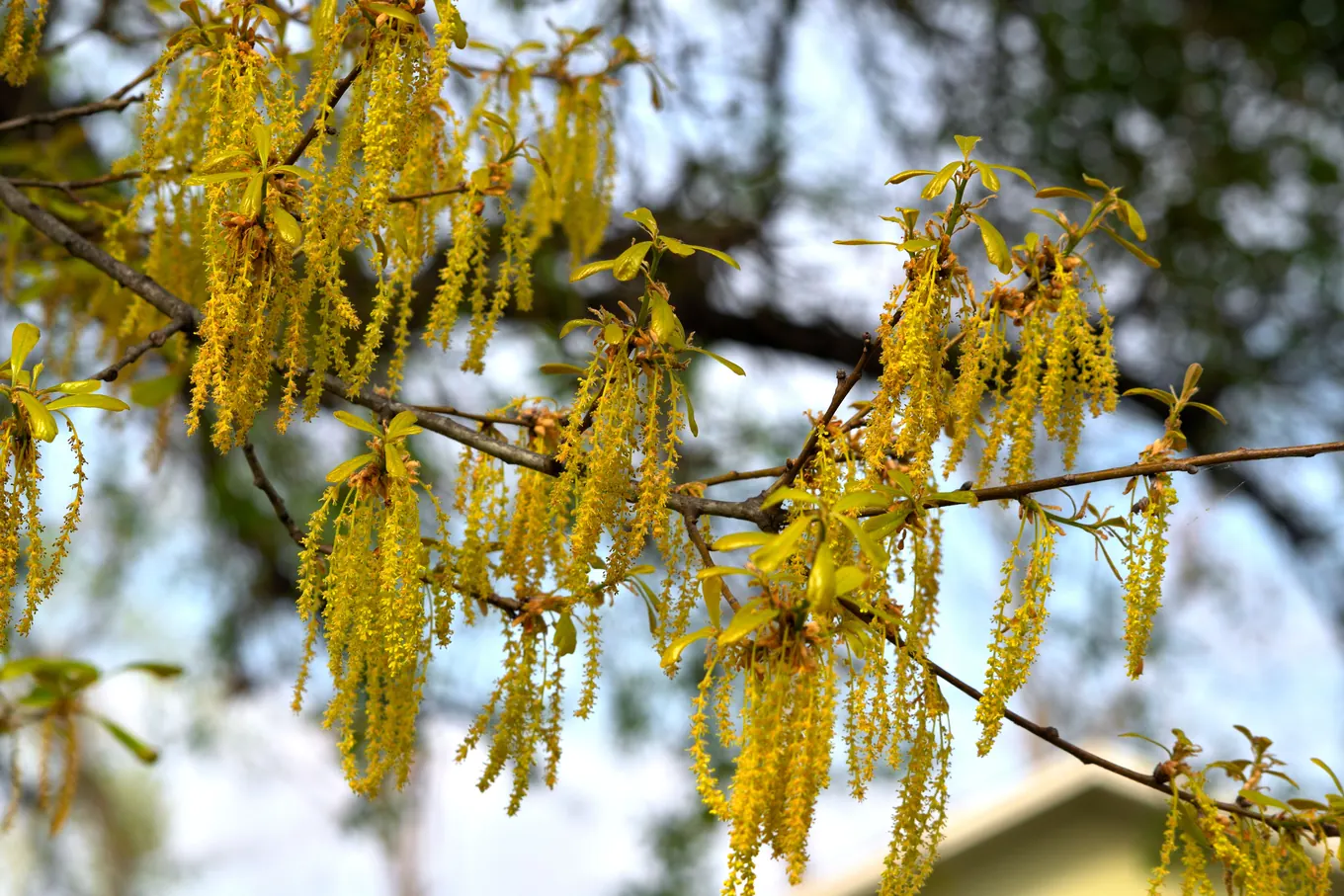
Pollen is the reason the spring clean goes at the end of the season rather than the start: wash in early March and the glass is dusted again within the week. On a screened lanai, the mesh traps pollen in the weave, so plan the screens into that same late-spring visit.
When do lovebugs fly, and why clean them off fast?
Twice a year, and their remains are worth removing within days. UF/IFAS says each of Florida’s two lovebug generations lasts about four weeks, in April to May and in August to September.
Each of the two Plecia nearctica generations in Florida lasts about four weeks in April–May and August–September.
Source: UF/IFAS, Lovebug, Plecia nearctica Hardy (EENY 47)UF/IFAS also notes that their slightly acidic body fluids can etch car paint if left for several days, and recommends soaking for about five minutes before scrubbing. That research is about cars, not balconies, but the same caution makes sense for a painted rail or a glass panel: soak, then wipe, rather than scraping dried bodies off.
When does Saharan dust reach Florida?
In early summer, in pulses rather than all at once. NOAA’s hurricane researchers say Saharan Air Layer activity usually ramps up in mid-June, peaks from late June to mid-August and subsides quickly after that, with outbreaks leaving Africa every three to five days in the peak weeks and reaching as far west as Florida.
When a plume arrives, the sky turns milky and a fine dust settles on glass and rails. It does not call for its own visit; it adds to what the late-summer clean removes. We have seen claims that dust lands heavier on high floors, and found no source for them: NOAA describes the dust layer as starting about a mile above the surface.
How does the rainy season change the schedule?
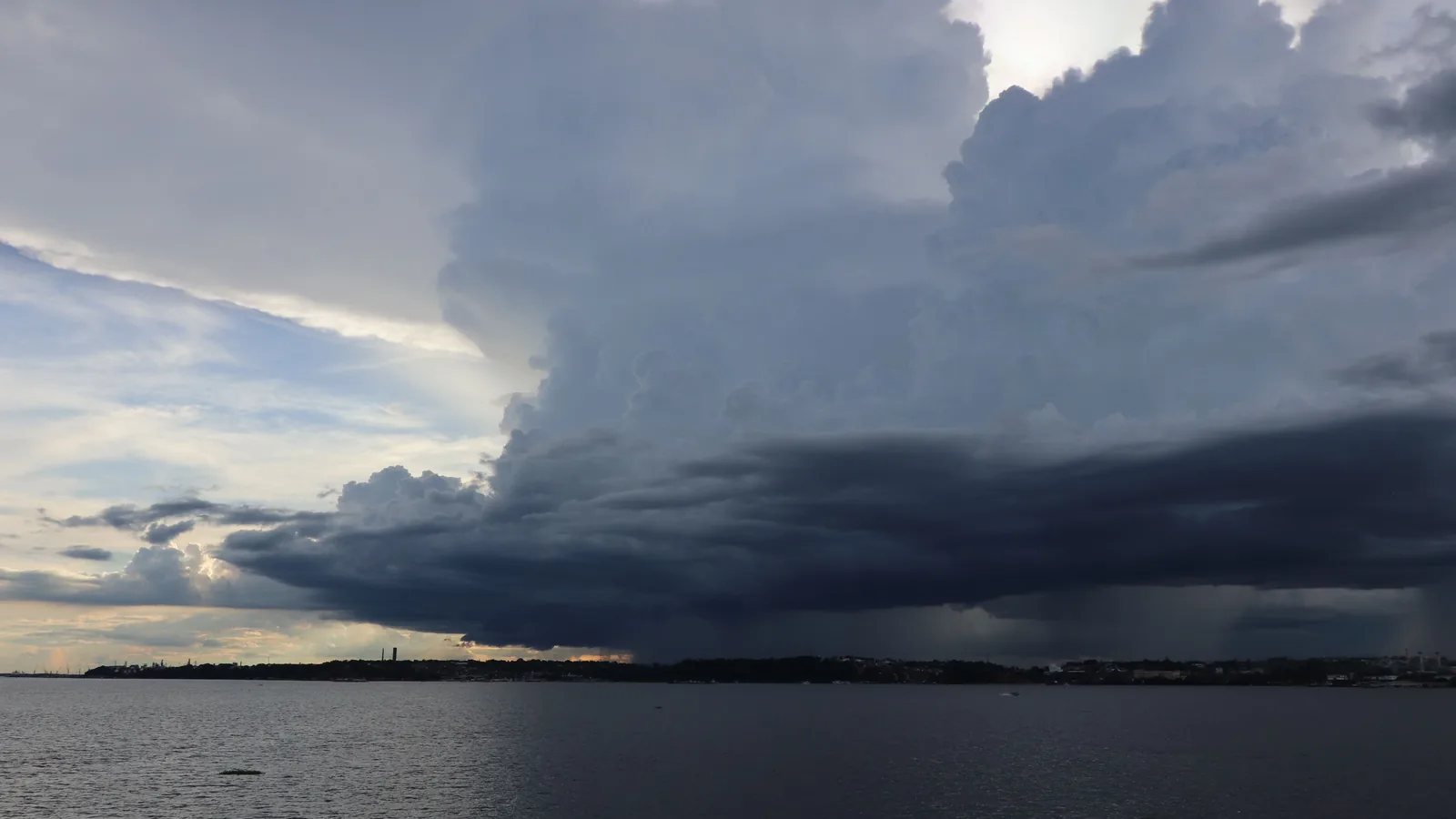
It makes shade and moisture the thing to watch. The National Weather Service office in Tampa Bay dates the rainy season from about May 25 to October 10 for most of West Central Florida, peaking from July through early September, with warm, humid conditions and frequent thunderstorms.
July through early September is when the rainy season peaks.
Source: National Weather Service Tampa Bay, Florida Thunderstorm SeasonConstant damp is what mildew needs. EPA’s rule for mold is that moisture control comes first, and it notes that materials dried within 24 to 48 hours usually will not grow mold. On a balcony, that means clearing the drain before the summer storms, lifting rugs that hold water, and checking shaded corners and the underside of furniture in August.
Does living on the water mean cleaning more often?
Yes. Salt settles far faster close to the water, and it only comes off when rain or a person rinses it. In NASA’s corrosion measurements at Kennedy Space Center, salt deposition 150 feet from the Atlantic was more than ten times what reached a site about 600 feet inland.
AkzoNobel, which makes powder coatings for aluminum rails, sets its cleaning interval by distance: a quarterly clean for buildings between 50 and 500 meters from the shore, twice a year out to two kilometers. A balcony across the park from the bay on Beach Drive, or facing Hillsborough Bay from Harbour Island, falls in the quarterly band.
What does a year of balcony care look like?
Here is the calendar the sections above add up to, for a downtown balcony on either side of the bay:
| Months | What lands on the balcony | What to do |
|---|---|---|
| February to May | Oak pollen, heaviest in March and April | Spring clean at the end of the season, screens included |
| April to May | First lovebug flight, about four weeks | Soak and wipe remains within days |
| Late May to October | Rainy season and afternoon storms | Clear the drain, lift rugs, check shaded corners |
| Mid-June to mid-August | Saharan dust pulses | Add it to the late-summer clean on the water |
| August to September | Second lovebug flight | Soak and wipe remains within days |
| Late November | Hurricane season ends November 30 | Fall clean and a salt rinse |
| December to January | Drier, quieter months | Winter clean for waterfront units |
A Tampa Bay balcony calendar built from UF/IFAS, NOAA and National Weather Service dates.
Want these dates on someone else’s calendar? Text us and we will set up the visits.
Text to scheduleWhat does waiting too long between cleans cost?
Damage that cleaning can no longer undo. Salt left on bare aluminum can pit it, rain that runs off concrete onto glass can leave deposits that stain or etch the panel, and droppings on stone can stain in ways that are hard to remove. None of that happens in a month, and all of it is slower on a balcony cleaned on schedule.
The cost of waiting is not a higher bill with us, since the $2 per square foot rate does not change with condition. It is what the clean cannot fix. The balcony cleaning price guide covers the rate, and what salt does to each railing material covers where cleaning stops and repair begins.
Do not sweep heavy, dry bird droppings. CDC workplace guidance says to wet them first to keep the dust down, and to leave large accumulations to specialists.
What should each seasonal clean cover?
The whole balcony, top to bottom, in the same order each time:
- Clear furniture, rugs and planters off the floor.
- Sweep and vacuum dry dirt, pollen and dust first.
- Wash rails and glass with mild soapy water and a squeegee.
- Mop the floor damp, in sections, from the rail back to the door.
- Clean screens, cushions and furniture before they go back.
- Clear the slider track, weep holes and balcony drain.
- Check shaded corners and furniture undersides for mildew.
The no-hose cleaning guide covers each step in detail, and a recurring plan puts the visits on this calendar for you.
Put two dates in your phone now, one for late May and one for late November. On the water, add August and January, and the calendar does the rest.
Frequently asked questions
How often should I clean my balcony in Florida?
Twice a year for most balconies, in late spring after oak pollen season and in late November after hurricane season. Balconies facing Tampa Bay do better every three months, because salt builds up faster close to the water.
What is the best month to clean a balcony in Tampa Bay?
Late May for the spring clean, once oak pollen has passed its March and April peak, and late November for the fall clean, after hurricane season ends on November 30.
How quickly should I clean lovebugs off my balcony?
Within a few days. UF/IFAS notes their slightly acidic remains can etch car paint if left for several days and recommends soaking for about five minutes before scrubbing, which is a sensible approach for rails and glass too.
Does Saharan dust mean I need to clean more often?
Usually not on its own. NOAA says the dust arrives in pulses from mid-June to mid-August, so a late-summer clean on a waterfront balcony removes it along with the salt.
How often should a waterfront balcony railing be washed?
Quarterly for buildings less than 500 meters from the water and twice a year out to 2 kilometers, according to AkzoNobel’s maintenance table for powder-coated aluminum.
Does cleaning more often cost more per visit?
Not with Bay Balcony. The rate is $2 per square foot whatever the balcony’s condition, so an 80 square foot balcony is $160 a visit on either schedule.
Sources
- UF/IFAS Gardening Solutions. Pollen and Allergies. gardeningsolutions.ifas.ufl.edu
- UF/IFAS News. The unwelcome dust that won’t quit: pollen season hits with full force (March 17, 2026). blogs.ifas.ufl.edu
- UF/IFAS. Lovebug, Plecia nearctica Hardy, EENY 47 (revised 2024). ask.ifas.ufl.edu
- NOAA Atlantic Oceanographic and Meteorological Laboratory. Saharan Air Layer. aoml.noaa.gov
- National Weather Service Tampa Bay. Florida Thunderstorm Season. weather.gov
- NOAA National Hurricane Center. Tropical Cyclone Climatology. nhc.noaa.gov
- US Environmental Protection Agency. A Brief Guide to Mold, Moisture and Your Home (2026). epa.gov
- AkzoNobel Interpon. Guidance Note 6: Cleaning and Maintenance of Powder Coated Architectural Components (2024). akzonobel.com
- CDC, National Institute for Occupational Safety and Health. Histoplasmosis prevention: elimination and engineering controls. cdc.gov