Can a Grill Stay on a Tower Balcony?
The model fire code bars most grills on balconies. Your declaration can be stricter, and the edition in force is not a blog post.

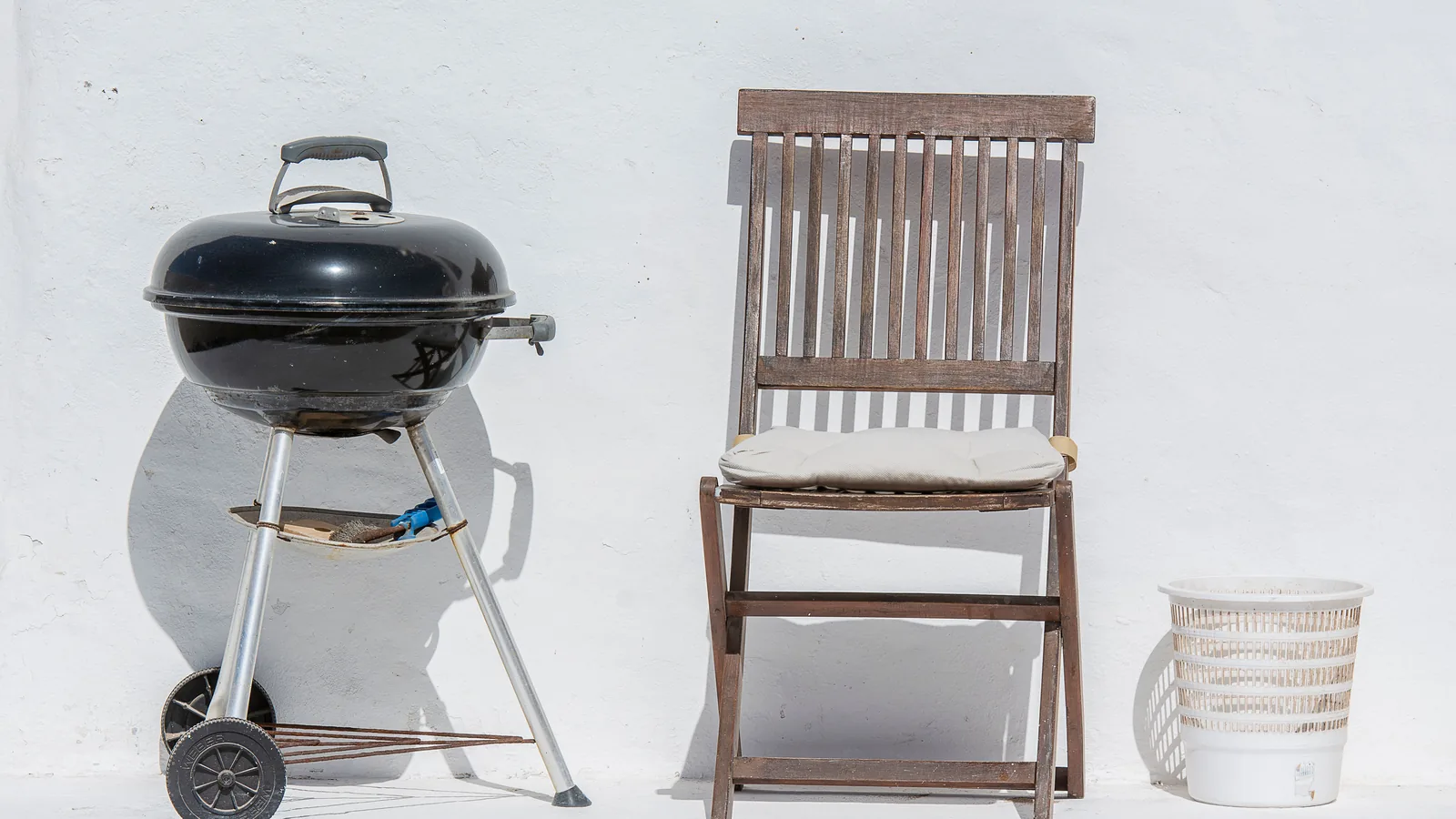
Store a grill on a tower balcony and a manager in St. Petersburg or Tampa will usually already have a sentence about it. The model fire code tells most buildings not to use or keep a cooker on a balcony. Your declaration can ban one even if a narrow exception exists. Read both. This page is not a permit.
People who live in St. Petersburg's downtown, and in Tampa's, keep small grills because the balcony is the only outdoor floor they have. The building often already answered the question in the rules and regulations, in a sentence nobody read at closing.
Two documents matter, and they are not the same document. The fire code is a life-safety rule about flame near a structure. The declaration is the condominium's own rule about what a resident may keep on a limited common element. You can be inside one and outside the other.
What does the model fire code say?
NFPA, which publishes the model fire code many states adopt, says that for buildings other than one- and two-family dwellings, outdoor cooking appliances are not to be used or kindled on any balcony, under any overhang, or within 10 feet of a structure. The same guidance says those appliances are not to be stored on balconies, because a grill that lives there gets lit there.
The electric exception has moved. A 2006 line that allowed listed electric grills was taken out in the 2009 edition. The 2024 model code, as NFPA describes it, allows some electrically powered cooking appliances listed to UL 1026, in residential buildings that are sprinklered or of Type I or Type II construction, used as the manufacturer says. Appliances meant for outdoor use still do not belong in an enclosed space.
That is the model code's shape, from NFPA's own explanation. It is not a sentence from your building's rules, and it is not automatically the sentence Florida is enforcing this month.
Which Florida edition is actually in force?
Florida adopts a fire prevention code on a three-year cycle through the State Fire Marshal. The Marshal's page lists the 8th edition as effective December 31, 2023. A separate Florida-specific amendment file for NFPA 1, 2024 edition, is marked effective December 31, 2026. Do not treat that file as today's code.
The 2026 file, which is a draft of Florida's edits rather than a ruling on your balcony, shows a section 10.10.6.1. Unless an exception applies, outdoor cooking appliances are not to be used, kindled, or stored on any balcony, under any overhang, or within 10 feet of a structure, for buildings other than one- and two-family homes. A following line permits listed electric portable tabletop grills not over 200 square inches of cooking surface.
If you need the wording that applies on a Tuesday in 2026, open the edition the Marshal says is effective, or ask the fire official your building actually answers to. A PDF with a future effective date is a preview. It is not a permission slip.
Can the declaration ban a grill the code allows?
Yes. A code exception is a ceiling on what the state will require, not a floor on what your condominium may forbid. Many downtown declarations ban open flame, charcoal, and propane on the balcony in a house rule that never mentions NFPA.
The responsibility guide is about who repairs the slab, which is a different argument. The maintenance statute opens on the association. It then allows the declaration to pass a shared-but-exclusive area to the people who use it. A grill rule is usually in the use restrictions, not in that chart.
Bay Balcony will not tell you the grill is allowed. We clean grease. If the building says the appliance has to go, that instruction outranks a cleaning appointment.
This is general information about how Florida condominium documents usually work, not legal advice. Your declaration governs, and a Florida community association attorney can read it with you.
Where should the grill go instead?
If the code and the declaration both bar the balcony, the grill does not get a compromise spot under the overhang. The model guidance treats the overhang and the 10-foot band the same way it treats the balcony. A friendlier reading is how people get a citation.
Some buildings have a ground-level cooking court. Some do not. If yours does not, the honest outcome is that this building is not a grilling building. That is a closing fact, not a cleaning fact.
St. Petersburg towers and Tampa towers write this differently. Beach Drive house rules are not Channelside house rules. Ask the manager for the page, not for a hallway opinion.
Does a wash have anything to do with this?
Grease, soot, and the rust ring under a stored grill are soil. They come up, or they do not, the way any other mark does. A wash is not a code inspection and not a note to the fire marshal.
The rules guide covers the rest of what a declaration usually restricts. The pressure-washing page is the other common ban: water over the rail. A grill ban and a hose ban can both be true.
The condo page is the wash itself. St. Petersburg and Tampa are the coverage area. We bill $2 a square foot. We do not bring a hose. If a grill is still on the slab when we arrive, we work around it. We do not light it, move it to the corridor, or tell you it is legal.
Propane cylinders draw a separate worry from charcoal, because people store the spare tank beside the slider. If the house rules ban storage, the spare tank is the violation even on a week you never cook.
An electric tabletop unit is the exception people hear about and then stretch. The Florida draft line we read caps the cooking surface and calls the unit listed. A full-size outdoor gas grill is not that line.
Pinellas and Hillsborough buildings both sit under the state fire prevention code. A city brochure does not replace it. If a manager quotes a local pamphlet, ask which edition of the state code the pamphlet is summarizing.
We will not haul a grill down the service elevator as part of a wash. That is a move, and it can be the thing the building was trying to stop. Book a wash for the floor. Deal with the appliance with the manager.
NFPA's published note says outdoor cooking appliances are not to be used or kindled on a balcony of a multifamily building, as opposed to a detached house, or stored there.
Source: NFPA grill guidanceThe State Fire Marshal lists the 8th edition of the Florida Fire Prevention Code as effective December 31, 2023.
Source: Florida State Fire Marshal| Question | Document that answers it | What it does not answer |
|---|---|---|
| May I light a grill here? | Fire code edition in force, then house rules | Whether the grease will come off |
| May I store one here? | Same two documents | A neighbor's memory of last summer |
| Who washes the soot? | Declaration maintenance section | Whether the grill was allowed |
| Is the 2026 amendment live? | State Fire Marshal effective date | A PDF with a future date |
Four questions, three documents. Mixing them up is how a balcony argument starts.
If the only question is the soot, a photo is enough for a price.
Text a photoFrequently asked questions
Does Bay Balcony approve grills?
No. We do not issue a building approval, and we do not tell you a unit is code-compliant. Ask the manager and, if you need a ruling, the fire official.
What if my neighbor grills every Friday?
That is a rules complaint, not a cleaning booking. A photo of soot on your rail is still useful if you want the rail washed.
Will you remove grease if the grill was against the rules?
Yes, if it is soil on the floor or the rail we can reach. The wash does not legalize the appliance, and it does not report you.
Are electric grills always allowed?
No. The exception, where it exists, is narrow and edition-specific. Your declaration can ban electric units too.
Is a hibachi different from a grill?
The model guidance treats hibachis and similar cooking devices the same as grills. A smaller flame is not a different rule.
Can I keep the grill if I never light it?
Storage is part of the ban in the guidance we read. An unlit grill on the balcony is still storage.
Sources
- NFPA, Fire Code Friday on grill location: for other than one- and two-family dwellings, outdoor cooking appliances are not to be used or kindled on a balcony, under an overhang, or within 10 feet of a structure, and are not to be stored on balconies. Electric exceptions have changed by edition. nfpa.org
- Florida State Fire Marshal: the 8th edition of the Florida Fire Prevention Code is listed as effective December 31, 2023. myfloridacfo.com
- Florida-specific amendments file for NFPA 1, 2024 edition, marked effective December 31, 2026, section 10.10.6.1: use, kindling, and storage barred on balconies except as the file permits, including a listed electric tabletop grill line. Not the edition in force before that date. myfloridacfo.com