Hard Water Spots on Glass Balcony Railings: What Actually Works
The spots look permanent because they sit in the same place after every rain. Most of them are not. A few of them are, and the test is simple.

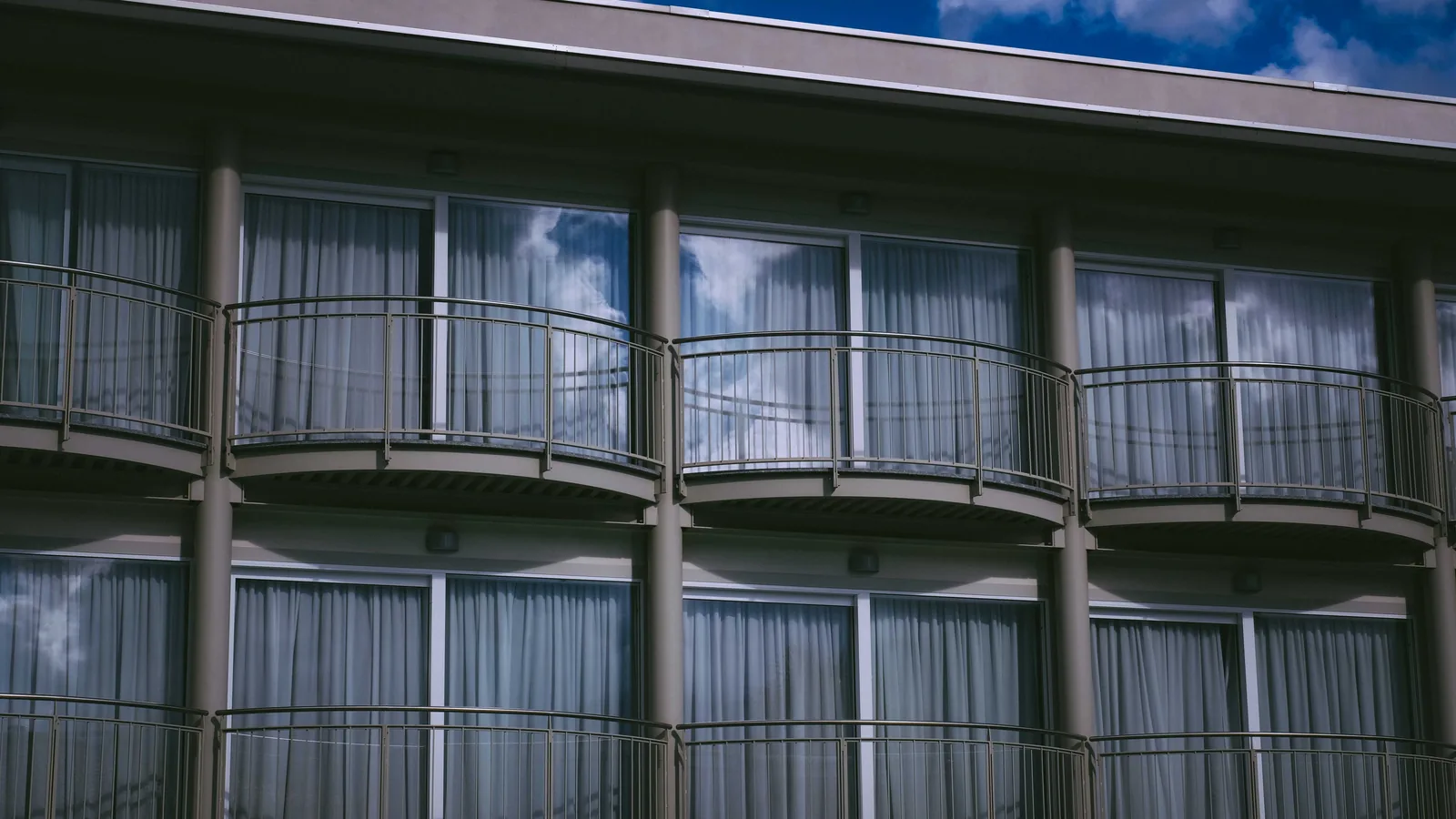
Hard water spots on a glass railing are dried minerals left when a droplet evaporates. In Florida that droplet is rain, irrigation, or sprinkler overspray, often carrying alkaline material off concrete. Salt crystals can stick to the surface too. Salt itself is not what etches the glass. A wash lifts a deposit. It cannot undo etching.
Why does Florida water spot glass?
A spot is the outline of a drop. The water leaves. The minerals stay. On a balcony the water is rarely plain rain. It runs off the slab edge, off a painted rail, and off the concrete above you. That runoff is the part glass makers warn about.
Rainfall can permeate concrete, then leach alkaline materials from it, and deposit them on the glass. In some instances, this may cause surface staining and etching.
Source: Vitro TD-107, Residue on GlassDowntown towers add a second source: irrigation heads on the amenity deck and on the setback below you. A head that kisses the glass every morning writes the same arc of spots. The salt-air guide separates that from chloride on aluminum. Do not treat every white mark as salt.
How do you tell etching from a deposit?
A deposit sits on the glass. An etch is the glass. Wet the panel with clean water and look at it wet, not dry. A deposit darkens or smears. An etch stays as a dull patch in the same place, wet or dry, and a fingernail catches it.
That is a field check, not a lab test. If the wet glass looks clear and the dry glass looks spotted, you still have a film. If a gray patch remains after a careful wash, stop shopping for a stronger chemical. The panel may already be etched, and more acid will not put the surface back.
| What you see | Wet test | What a wash can do |
|---|---|---|
| Rings and arcs | Softens or smears | Often lifts |
| White film that wipes | Clears while wet | Lifts if you do not let it dry again |
| Dull patch, rough to a nail | Still dull | Will not rebuild the surface |
Look at the panel wet before you decide it is ruined.
What removes a deposit safely?
Soak, do not scrape. The glass association's procedure starts with plain water and a gentle glass wash, then a squeegee that takes the solution off at once. Residue left to dry is a new spot.
Generally, twice per year cleaning is sufficient; however, specific regions may require more frequent cleaning due to environmental factors and atmospheric pollutants.
Source: National Glass Association, FB01-00 (2023)On a balcony you also cannot flood the panel. Water that runs off your glass lands on the unit below, and a hose is the wrong tool in a tower. The bucket method is the one that keeps the wash on your floor. Glass and railing cleaning is the hired version of that job.
Do not mix a bleach cleaner with anything that contains ammonia. The fumes are the hazard, and neither belongs on a first pass over balcony glass.
What permanently ruins a glass panel?
Abrasive pads, dry wiping a sandy film, and metal blades. Also alkaline water left to dry, over and over, on the same pane. Vitro's note on residue is blunt: water that stays on glass longer than a moment can start reactions that stain or corrode the surface.
Whenever water is permitted to remain on a glass surface for longer than a moment, several unique chemical reactions can occur that cause corrosion damage, or stain.
Source: Vitro TD-105, How to Prevent Glass CorrosionThat document is about glass stored in packs, where water gets trapped. Installed railing glass rarely traps water the same way. The useful lesson is still the dry-down: do not leave wash water or runoff sitting in the sun on the pane. Say that limit out loud. Do not stretch a storage bulletin into a claim that every Florida railing is corroding.
Is sprinkler overspray the real cause?
Often, on the lower floors and on any balcony under a deck irrigation line. The pattern is an arc, repeated, denser on the side the head points. Rain spots are more random. Salt film is more even, and it shows up on the rail as well as the glass.
If the arc matches a head you can see, ask the building to re-aim it. Washing the glass every week while the head keeps hitting it is a loop. A one-time wash after the head is moved is the repair.
Send the arc in a photo if you want a wash after the head is fixed.
Text a photoHow do you stop the spots returning?
Wash before the film bonds, and dry the pane. Twice a year is the association's baseline for architectural glass. A waterfront balcony in this climate needs more, because salt and concrete runoff keep arriving. Quarterly is a maintenance choice, not a code section.
Do not pressure-wash the glass to "blast the spots off." Pressure is the wrong tool on coated and tinted glass, and towers restrict it for the unit below. The pressure-washing rules page is the constraint. Condo cleaning is how we do the reachable faces without that spray.
If the dull patch is still there after a real wash, the honest limit is replacement or a glass company, not a stronger cleaner. We would rather say that from a photo than sell a second visit that cannot change the surface.
Frequently asked questions
Does salt air etch balcony glass?
No authoritative glass maker says salt etches glass. Salt crystals can stick to the surface, especially on self-cleaning coatings. Etching that makers describe comes from alkaline material washed out of concrete, not from sea salt itself.
Can I use a razor blade on the spots?
Not as a routine. The National Glass Association says razor blades and metal scrapers should not be part of ordinary cleaning. A blade can put a scratch next to the spot you were trying to lift.
Will vinegar fix etched glass?
A mild acid can loosen a mineral film that is still on the surface. It cannot rebuild glass that has already been eaten. If the haze is still there after a proper wash and the surface feels rough, the panel may be etched.
How often should railing glass be washed?
The same association says twice a year is often enough, and that some regions need more because of pollution and weather. On a Tampa Bay waterfront, quarterly is the practical rhythm, not a statute.
Do you clean the outside face of the glass?
Only the face we can reach without leaning over the rail. A full-height panel whose outside face is open air is not a ladder job from your floor. We will say so from the photo.
Is this the same as a cloudy railing?
A cloudy panel can be film, etching, or a failed coating. Spots that sit in droplets are the mineral problem. A uniform haze across the whole sheet is a different diagnosis, and cleaning may not be the fix.
Sources
- Vitro Architectural Glass. TD-107, Residue on Glass (2018). vitroglazings.com
- Vitro Architectural Glass. TD-105, How to Prevent Glass Corrosion. vitroglazings.com
- National Glass Association. FB01-00, Proper Procedures for Cleaning Architectural Glass (2023). glass.org