How to Clean a High-Rise Balcony Without a Hose, Step by Step
A condo balcony gets cleaned from the top down with a bucket, a mop and a squeegee, and none of the water goes over the edge. This guide walks through it in order, from clearing the floor to the last wipe of the door track.


To clean a balcony without a hose, work dry to wet and top to bottom: clear the floor, sweep and vacuum the loose dirt, then wash the rails and glass with a bucket of mild soapy water and a squeegee, and the floor with a wrung-out microfiber mop. Finish with the door track and the drain. The dirty water ends up in your bucket, not on the balcony below.
Why shouldn’t you hose down a high-rise balcony?
Because the water has only two places to go: the small drain in your slab, or down onto the balcony underneath yours. EPA’s WaterSense program puts a hose left running at 6 gallons a minute, and whatever the drain cannot take carries dirt, bird droppings and cleaner onto your neighbor’s furniture. That is why many condo buildings ban hosing and pressure washing.
The water that does reach the ground has a second problem. On the street it runs into storm drains, which lead to rivers and the bay.
Roadside storm drains often lead directly to local streams and rivers, so anything that flows into them makes it to local waterways without treatment.
Source: US Environmental Protection Agency, Sources and Solutions: In and Around the HomePinellas County says wash water and detergents may not enter the street, storm drain or gutter, and the City of Tampa says local ordinances make it illegal to dispose of any pollutants to the storm sewer. We found no rule that names a balcony rinse, so the practical reason stays the neighbor below. Your building’s own rules may be stricter; where Florida condo balcony rules come from explains how to find them.
What do you need before you start?
A bucket, a mild detergent, a flat microfiber mop, a squeegee, microfiber cloths, a soft brush, a broom and dustpan, and a vacuum with a crevice tool. Add a second bucket for rinse water if your balcony is large, and a towel or two to lay in front of the slider.
Skip anything abrasive. The makers of powder-coated aluminum rails, architectural glass and outdoor fabric all warn against abrasive cleaners, and a balcony has all three within arm’s reach.
How do you clear the balcony first?
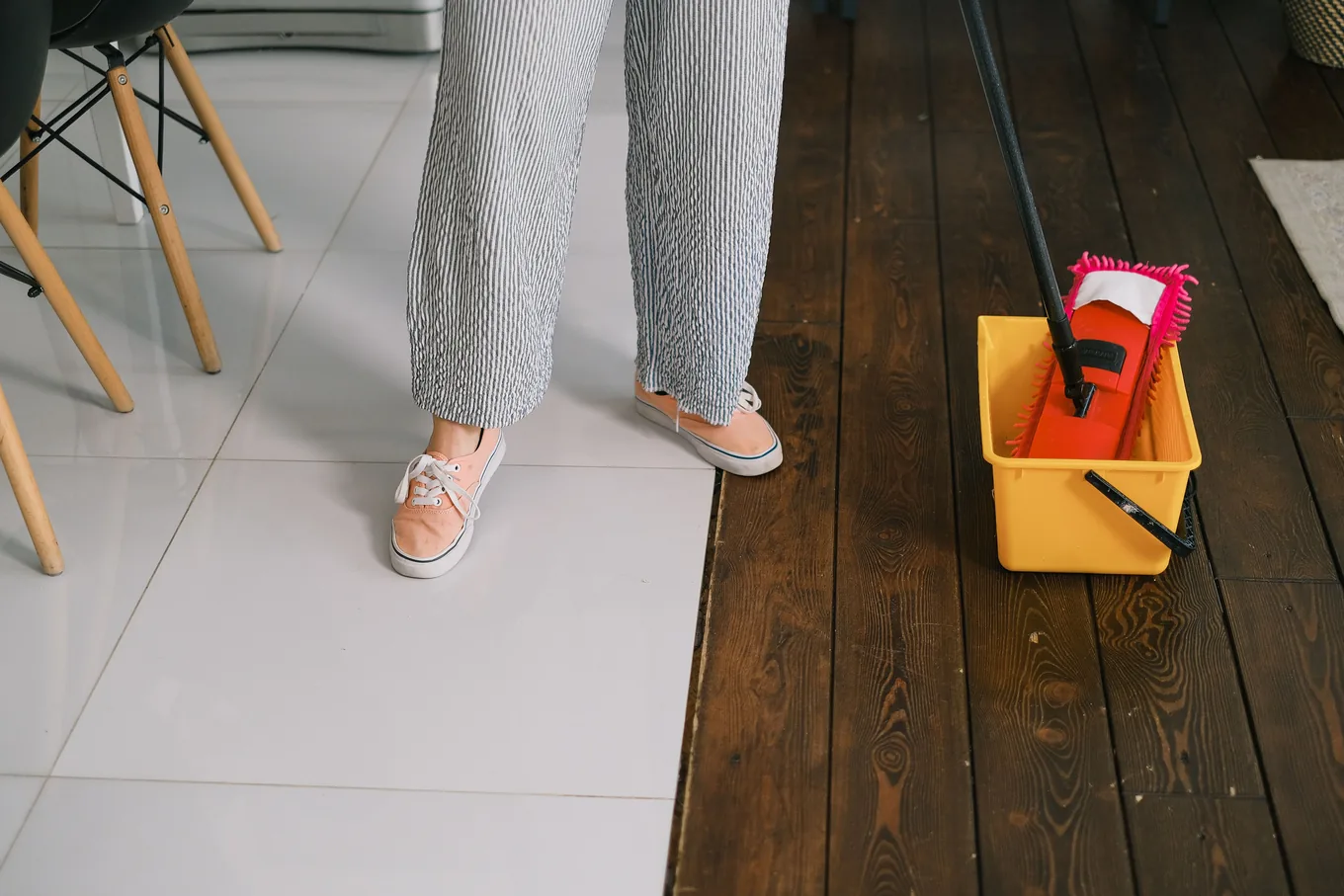
Take everything that moves inside: chairs, cushions, planters on saucers, rugs, the grill cover. You clean the floor once instead of around the furniture, and you can wash each piece where the water stays contained. Lift planters rather than dragging them across the floor.
Before you start, check whether your building limits balcony cleaning to certain hours or days, and tell the front desk if a neighbor below might see drips.
Lay a towel just inside the slider before any water comes out. It catches the drips you carry in and out with the bucket.
Why does dry debris come off first?
Dry dirt turns to mud the moment it gets wet, and mud smears into the texture of a concrete or tile floor and into the corners of a glass rail. Sweep and vacuum first, and the washing afterward only has to deal with film.
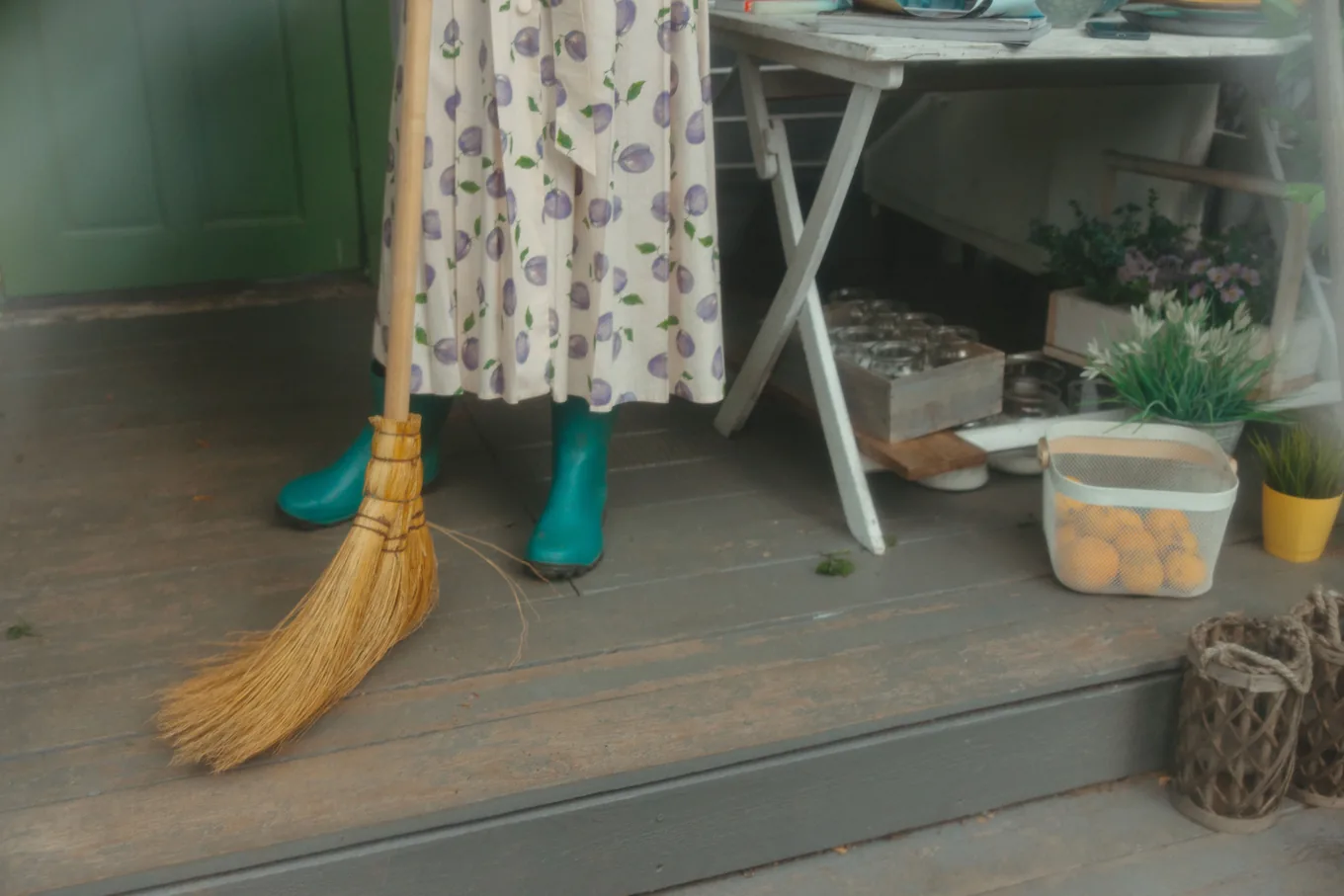
Sweep from the rail toward the door, never toward the edge, and vacuum the corners, the base of the rail and the slider track where leaves and grit collect. Knock cobwebs and pollen off the ceiling and light fixture with a dry brush at this stage, before anything below them is clean.
How do you clean the floor without flooding it?
Use a damp mop, not a wet one, and work in sections from the rail back toward the door:
Mix a gallon of warm water with a small squeeze of mild detergent.
Dip the microfiber pad, then wring it until it stops dripping.
Mop a section about the width of the pad, starting at the rail.
Rinse and wring the pad in the bucket after each section.
Go over the floor once more with clean water and a fresh pad, then let it air dry.
Dark spots in the corners, under planters and along the base of the wall are often mildew. EPA’s advice for hard surfaces is plain soap and scrubbing.
Scrub mold off hard surfaces with detergent and water, and dry completely.
Source: US Environmental Protection Agency, A Brief Guide to Mold, Moisture and Your HomeEPA does not recommend bleach as a routine mold treatment, and warns never to mix chlorine bleach with cleaners that contain ammonia, because the fumes are toxic. On a small balcony with the slider open, those fumes come inside.
How do you clean railings and glass without streaks?
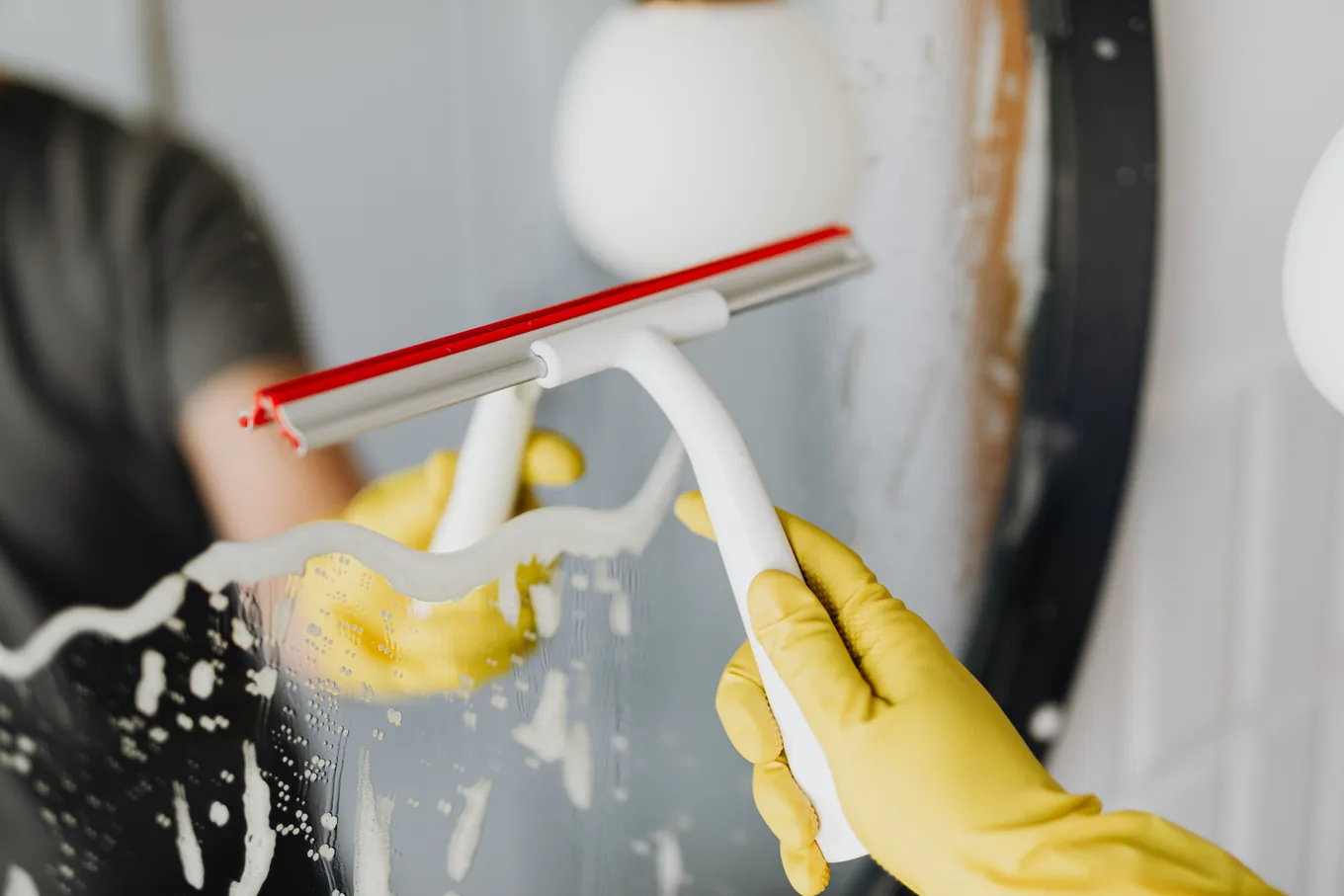
Wet the glass with mild soapy water and squeegee it off right away, before the solution dries. The National Glass Association’s cleaning guidance describes the same sequence: soak the surface with clean water and a mild, non-abrasive cleaner, then remove all of it with a window squeegee immediately. Work from the top of each panel down, wipe the blade on a cloth between strokes, and dry the bottom edge last, where the water collects.
Wash the metal rail, posts and clamps with the same bucket and a soft cloth. AkzoNobel, which makes powder coatings for architectural aluminum, calls for warm water, a pH-neutral detergent and nothing harsher than a soft brush, then a rinse. If your balcony faces the bay, our guide to salt air damage to balcony railings explains why the underside of the top rail matters most. Two things the glass guidance rules out: abrasives, and cleaning tinted or coated glass in direct sun.
Would you rather skip the bucket? Text us a photo of the balcony and we will send a price.
Text a photoHow do you clean the furniture and cushions?
Wash hard furniture with the same soapy water and a soft cloth, and wipe it dry so it does not spot. For fabric, follow the maker’s tag. Sunbrella’s instructions for its outdoor fabric are a good model: 1/4 cup of mild soap per gallon of lukewarm water, a sponge or very soft brush, a thorough rinse, and air drying. Its mildew recipe adds bleach, and Sunbrella warns that bleach can discolor fabric that is not its own, so do cushions over a towel, away from the rail.
Screens take the gentlest touch of anything on a balcony. Phifer, which makes screen mesh, says to scrub with warm water, a few drops of mild dish soap and a soft bristle brush, and to rinse at light pressure. A screened lanai has far more mesh than a tower balcony and is worth doing on its own day.
How do you finish the door track and the drain?
Vacuum the slider track, then clear the weep holes, the small drain openings at the bottom of the sill that let water out of the track. PGT’s sliding door guide says to check that they are clear of dirt and to use a small, soft bottlebrush on the openings; Andersen’s says to check the weep holes for dirt if water pools in the sill.
Vacuum dirt from sill and track areas regularly and before each washing.
Source: PGT Industries, Sliding Glass Door Care and Maintenance GuideThen find the balcony drain, usually a small grate in the slab or a scupper at the edge, and pull out the leaves and grit by hand. A blocked drain lets rainwater stand against your slider. Wipe the track with a damp cloth last, since it collects whatever ran off everything else.
What does it cost to do it yourself or hire it out?
Doing it yourself costs the supplies and an afternoon. Hiring Bay Balcony costs $2 per square foot for the whole balcony, whatever its condition, with no minimum and no trip fee:
| Balcony | Size | Price |
|---|---|---|
| Juliet / step-out | 25 sq ft | $50 |
| Compact condo balcony | 50 sq ft | $100 |
| Typical downtown balcony | 80 sq ft | $160 |
| Large corner unit | 120 sq ft | $240 |
| Wraparound terrace | 300 sq ft | $600 |
Bay Balcony’s price at $2 per square foot. Our guide to what balcony cleaning costs breaks it down further.
Where does doing it yourself fall short?
The method above works. The places it runs short are time, reach and the building office. The outside face of a glass rail panel is out of reach from the balcony, and a squeegee on a tall panel takes practice. Some buildings also want a certificate of insurance before a contractor comes up, which our condo balcony cleaning page explains.
| Surface | Use | Avoid |
|---|---|---|
| Concrete or tile floor | Damp microfiber mop, mild detergent | Hose, pressure washer, standing water |
| Glass rail panels | Mild soapy water, then a squeegee | Razor blades, abrasives, letting solution dry |
| Powder-coated aluminum rail | pH-neutral detergent, soft cloth or brush | Abrasive cleaners and polishes, harsh solvents |
| Screens | Mild soap, soft bristle brush, light rinse | Hard scrubbing, high pressure |
| Cushions | Mild soap, very soft brush, air dry | Hard bristle brushes, bleach on the wrong fabric |
| Door track | Vacuum, soft bottlebrush, damp cloth | High-pressure spray |
What each maker’s guidance allows and rules out, surface by surface.
If the job is more balcony than afternoon, a recurring plan keeps it at the stage where one careful pass is enough. Either way, the test of a good clean is the balcony below yours: it should still be dry when you finish.
Frequently asked questions
Can you clean a condo balcony without running water?
You still need water, just not a running hose. A bucket of warm water with a little mild detergent, a well-wrung microfiber mop and a squeegee handle the floor, rails and glass, and the dirty water goes back into the bucket instead of over the edge.
Is it illegal to hose off a balcony in Florida?
We found no law that bans rinsing a balcony as such. Pinellas County and the City of Tampa do prohibit putting wash water and detergents into the storm drain system, and many condo buildings ban hosing because the water falls onto the units below.
What is the best cleaner for a balcony floor?
Mild detergent and warm water handle most balcony dirt. EPA gives the same mix for mildew on hard surfaces: scrub it with detergent and water, then dry the surface completely. Keep bleach out of the routine and never combine it with ammonia.
How do you clean glass balcony railings without streaks?
Wet a small section of the glass with mild soapy water and squeegee it off before it dries, working from the top down. The streaks usually come from solution left to dry on the panel, which the glass industry’s own guidance warns against.
Can you pressure wash balcony screens or door tracks?
Screen and door makers point the other way. Phifer says to rinse screens at light pressure, and PGT’s sliding door guide says not to use a high-pressure spray nozzle. Many condo buildings ban pressure washers outright.
How do you clean outdoor cushions on a balcony?
Sunbrella, which makes outdoor fabric, says to use 1/4 cup of mild soap per gallon of lukewarm water, a very soft brush, a thorough rinse and air drying. Check the tag first, because its bleach recipe is for its own fabric only.
How often should a high-rise balcony be cleaned?
Twice a year inland and four times a year on the water, where salt builds up faster. Powder-coating maker AkzoNobel sets the same three-month interval for coated aluminum close to the coast.
What does it cost to have a balcony cleaned by hand?
Bay Balcony charges $2 per square foot, so a typical 80 square foot downtown balcony costs $160. There is no minimum and no trip fee, and the price covers the floor, rails, glass, screens, furniture and door track.
Sources
- US Environmental Protection Agency. Sources and Solutions: In and Around the Home (2025). epa.gov
- Pinellas County. Preventing Urban Pollution. pinellas.gov
- City of Tampa. Stormwater Illegal Dumping. tampa.gov
- US Environmental Protection Agency. WaterSense for Kids (2026). epa.gov
- US Environmental Protection Agency. A Brief Guide to Mold, Moisture and Your Home (2026). epa.gov
- National Glass Association. FB01-00, Proper Procedures for Cleaning Architectural Glass Products (2023). glass.org
- AkzoNobel Interpon. Guidance Note 6: Cleaning and Maintenance of Powder Coated Architectural Components (2024). akzonobel.com
- Sunbrella. How to clean Sunbrella upholstery fabrics. sunbrella.com
- Phifer. How to Clean Window Screens (2023). phifer.com
- PGT Industries. Sliding Glass Door Care and Maintenance Guide. victorbilt.com
- Andersen Windows and Doors. Care and Maintenance Information (2023). mnwindows.com