Is a High Floor Dirtier Than a Low Floor?
The floor number is the wrong dial. Wind, rain, and a roof overhead decide more than the elevator button.

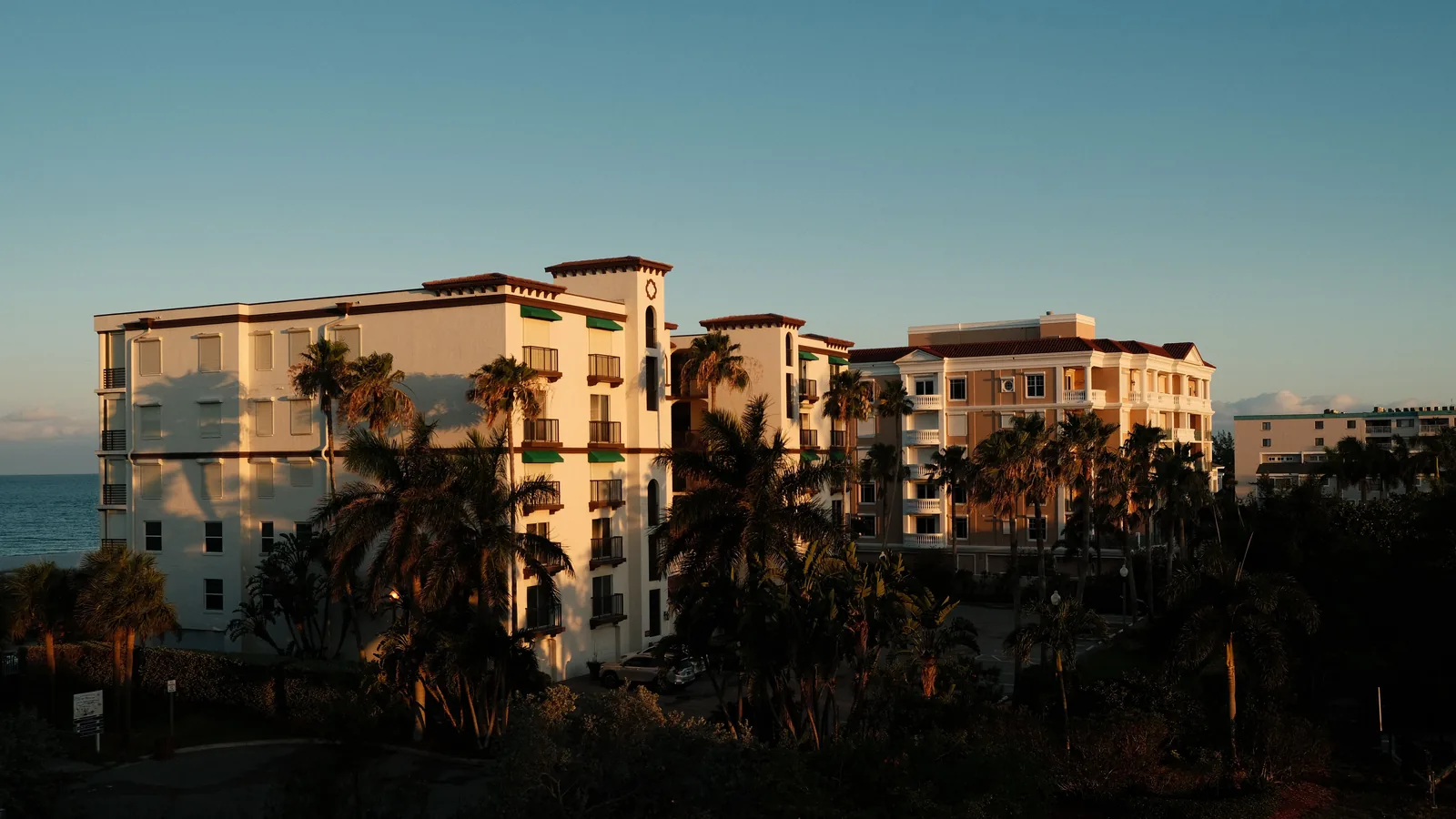
A high floor versus a low floor balcony is not a dirt ranking you can read off the elevator button. Near the shore, published aerosol work shows marine salt falling as you go up, not rising. A low floor under a tree can collect more pollen and leaf grit. A high floor with a roof overhead can hold salt the rain never rinses. Bay Balcony prices either floor the same way: the slab, not the story.
Does a higher floor collect more salt?
The sentence that sounds wrong is the true one. Salt in the air does not pile up as you climb. The shoreline studies show the marine aerosol thinning with altitude, and thinning again as you move inland. A 20th-floor rail on Beach Drive is not, on that evidence, a saltier rail than a 4th-floor rail in the same wind.
What the studies do not do is rank your building. They measured aerosol, not the film on a particular shoe. A rail the rain cannot reach will hold whatever landed, high or low. That is the salt guide, and it is why a covered corner can look worse than an open one three floors down.
Similar to hurricane season, the rainy season may occur before or after the aforementioned dates.
Source: National Weather Service, Tampa Bay rainy seasonWhat does a low floor collect that a high floor misses?
Leaves, pollen, and the grit a street throws up. A balcony under an oak, or over a loading dock, gets a different film than a balcony in clean wind. Downtown St. Pete's older blocks and Tampa's Bayshore towers are not the same exposure, and two units in one tower are not the same exposure if one faces the water and one faces the shaft.
Birds also pick ledges, not floor numbers. A splatter problem is a ledge problem. The bird guide is the page for that, and it does not sort by story.
Why can a covered high floor look worse?
Rain is a rinse the building did not schedule. An open low balcony gets that rinse. A high balcony under a deep soffit does not. Salt and dust land, nothing washes them, and the film bakes on. Owners call that "the high floor is dirtier." The soffit is the cause. The button is a coincidence.
Walk a Beach Drive stack and a Channelside stack on the same afternoon and the pattern repeats. The units under a brow look chalky. The units the squall can hit look merely dusty. Pinellas and Hillsborough buildings share that geometry. Floor number is what the listing advertises. The brow is what the rail remembers.
A low floor over a street in the Edge district collects a third film: brake dust and pollen, stuck to a rail the tree shades all afternoon. That is not "low floors are dirty." That is a tree and a road. Name the cause or the comparison is a superstition.
| What you can see | What it usually means | What it does not mean |
|---|---|---|
| White dust on an open rail | Salt or construction film, sitting where wind delivered it | That a higher button caused it |
| Black film in a shaded corner | Damp air and a surface that does not dry | That a low floor is "the mold floor" |
| Yellow dust in spring | Pollen on whatever faces the trees | That only penthouses get it |
Should the price change with the floor?
The price is the slab. Story count is not a line on the quote. A manager booking a stack should still send one photo per exposure, not one photo for the whole tower. A water-facing 8th floor and a shaft-facing 8th floor are different washes even when the square feet match. Harbour Island wind and an inland courtyard are not the same afternoon. Send the exposure. Keep the floor number for the elevator.
The St. Petersburg page and the Tampa page are the city hubs. Floor number is not a third city.
If a quote adds a "high-rise fee" or a "difficult access" line, ask what the difficulty is. In these downtowns the difficulty is a freight elevator window, and that is a scheduling note, not a second rate. A fee that cannot be tied to square feet is the line to cross off before you compare bids.
What should you photograph before you book?
The rail, the soffit if you have one, and the floor. A photo from the slider that includes the sky tells us whether rain can reach the glass. That is more useful than the floor number written in the text.
In general, the rainy season is characterized by warm, humid conditions with frequent showers and thunderstorms.
Source: National Weather Service, Tampa Bay rainy seasonThose showers are the free rinse. A balcony they never touch needs a person. Either story. Bring the floor number if the freight elevator needs it. Leave it out of the price. A Water Street unit and an Old Northeast walk-up can share a square footage and not share a film. Write the exposure in the text. Leave the adjective "high" out of the price entirely. Name the building in the text too.
Text a photo of the balcony if you want the visit priced before you book.
Text us a photoFrequently asked questions
Is a penthouse always worse?
Not on the salt evidence. A covered penthouse can hold more film than an open unit below it, because the rain never rinses it.
Is a garden-level balcony easier to keep?
It misses some windblown salt and collects more leaves and pollen. Easier is the wrong word. Different film, same wash.
Do you charge more above a certain floor?
The price is the slab. Story count is not a line on the quote.
Does this apply inland, in Hyde Park or Old Northeast?
The shoreline salt gradient is a coast fact. A few blocks inland, tree cover and shade matter more than altitude. The waterfront-versus-inland guide is the map for that.
Can I hose a low floor if nobody is below?
Wash water still has to go somewhere. On a tower it does not go over the rail, low floor included.
Sources
- National Weather Service, Tampa Bay rainy season. www.weather.gov
- Federal Trade Commission, home improvement estimates, for anyone comparing a height surcharge to a written scope. consumer.ftc.gov