Preparing Your Balcony for Hurricane Season
A balcony is the part of a condo a storm reaches first. This guide sets out the timeline, from the start of the season to the morning after, and what to do at each point.

Clear the balcony before the winds arrive, not while they are arriving. The National Weather Service issues a hurricane watch about 48 hours ahead of tropical-storm-force winds and a warning about 36 hours ahead, and says preparations should be complete before those winds reach you. On a balcony: furniture, pots and cushions inside, whatever stays tied down, the drain clear, and photographs taken first.
When should you prepare your balcony for a storm?
Prepare on the forecast, not on the weather outside. The Atlantic season runs June 1 through November 30, and the markers within it are the two the National Weather Service issues: a watch about 48 hours before tropical-storm-force winds are expected, a warning about 36 hours before.
All preparations should be complete.
Source: National Weather Service, Hurricane Watches and WarningsThe deadline is weather, not a clock: the NWS says the 36-hour warning exists “to give you time to complete your preparations”. A balcony takes most people under an hour, so the watch is when to start, and anyone leaving Florida for the summer should do it before the flight.

What has to come inside?
Everything that is not bolted down. Ready.gov’s hurricane guidance is to “de-clutter drains and gutters, bring in outside furniture and consider hurricane shutters”, and on a balcony that is the whole list: chairs, tables, cushions, umbrellas, pots, wind chimes, solar lights, the door mat and the grill if your building allows one.
Debris, such as signs, roofing material, siding and small items left outside become flying missiles during hurricanes.
Source: NOAA National Hurricane Center, Hurricane HazardsFlorida’s emergency management guide puts the test in six words: if you can pick it up, put it up. A ceramic pot that needs two hands still moves in a gust that lifts roof panels, and twenty floors up it has a long way to fall.
How do you secure what cannot come inside?
Lay it flat and tie it to something fixed. A table too wide for the slider goes upside down on the floor, against the wall rather than the railing, lashed to a post with rope or a ratchet strap. Glass tops are the exception: carry the top in even when the frame stays, because glass that breaks out there scatters over every surface you will walk on afterwards.
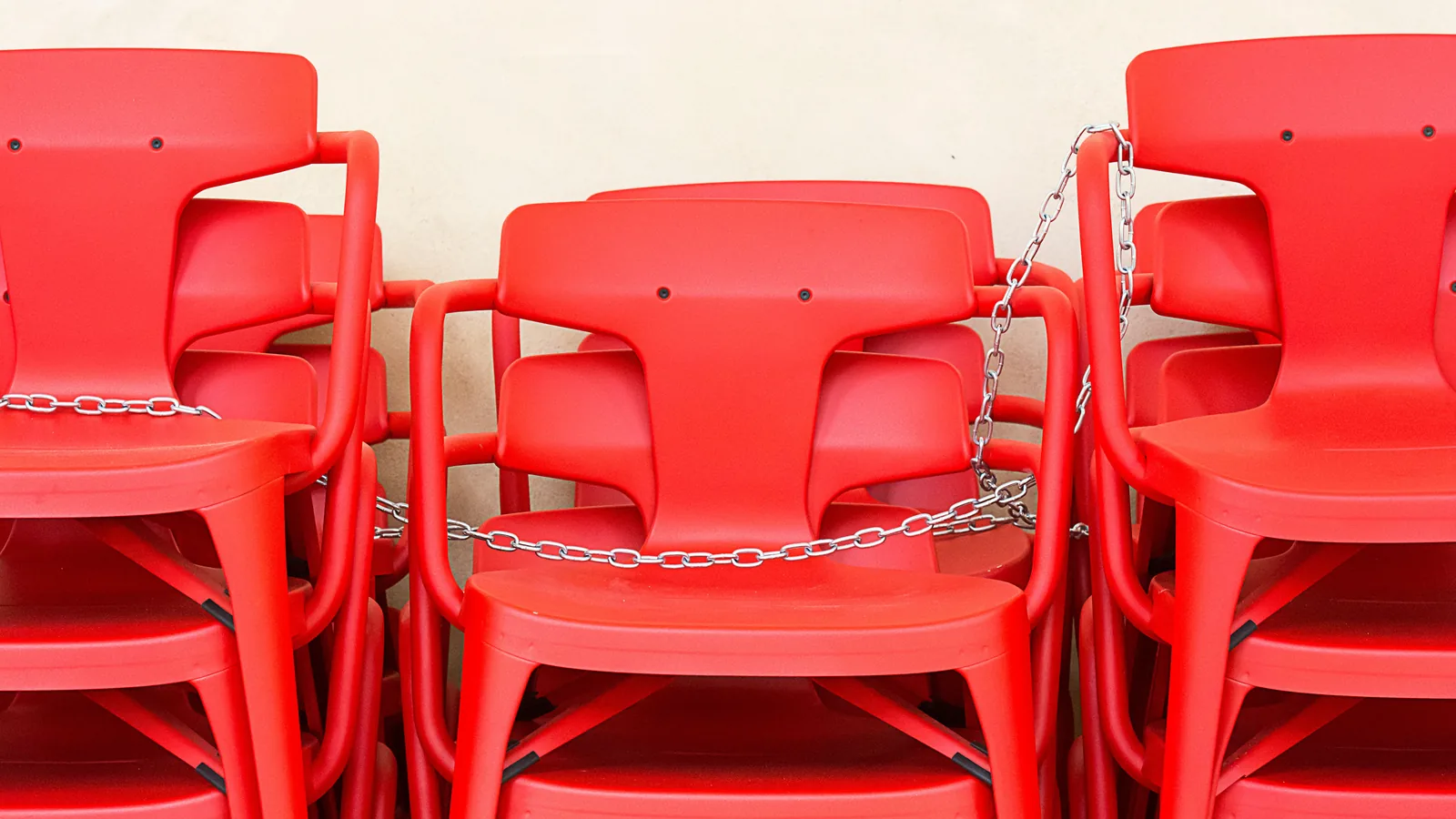
Stack chairs and thread a strap or chain through the frames, the way a cafe secures a terrace overnight, keeping the stack low and clear of the glass. Anything you cannot secure properly is better in the living room for two days than airborne over downtown St. Petersburg.
Which step do people skip?
The drain. A balcony sheds water through a scupper at the slab edge, and a season of leaves, pollen and grit narrows it before anyone notices. In a storm the rain arrives sideways for hours, and water that cannot leave sits against the slider.
That advice is ours, from what we find on balconies, not an agency’s: no federal, state or county source we checked links a blocked balcony drain to storm damage. The nearest official wording is Ready.gov’s general “de-clutter drains”. Lift the grate, clear what sits under it, and pour a bucket through to see it runs.
What should you photograph before the storm?
The balcony as it stands, before you empty it. Florida’s Chief Financial Officer publishes a consumer guide for natural disasters whose advice before a storm is plain: make an itemized list of your belongings with costs, purchase dates and serial numbers, and take pictures or video of the outside and inside of all areas of your home.
Dated photographs or videotapes of your possessions are also good ideas.
Source: Florida Department of Financial Services, Natural Disasters: Are You Prepared?On a balcony: a wide shot from the doorway, the furniture, the railing and glass as they look now, the ceiling, the slab edge and the screens. Afterwards the same guide asks for before-and-after photographs of repairs, and the receipts. What a policy covers is a question for your insurer.
Can your condo board order your balcony cleared?
Through its own documents, probably yes, and Tampa Bay towers commonly send a notice when a storm is forecast. That authority lives in the declaration and the rules, which the rules pillar goes through document by document.
This is general information about how Florida condominium documents usually work, not legal advice. Your declaration governs, and a Florida community association attorney can read it with you.
Section 718.1265, the statute people cite, is narrower than its reputation. A board gets those emergency powers only once a state of emergency is declared, and they run to disaster plans, closing parts of the property and contracting for debris removal. It never mentions balconies, sets no deadline, and bars a board from cutting owners off from their units. The hour in your building’s notice comes from the building.
What do you do on the balcony the day after?
Wait for the building to say the balcony is safe, then go in order: look, photograph, clear, rinse. Anything damaged gets photographed before it moves.

Bag the debris rather than sweeping it over the rail or into the street; Pinellas County asks residents to keep nearby drains clear before and after a storm. The no-hose method covers lifting wet grit without sending water onto the balcony below.
Keep storm drains near your home clear of leaves and debris, especially before and after a storm.
Source: Pinellas County, Flood Information: Property ProtectionTwo things follow within a few days. Check anything that stayed damp, since EPA treats controlling moisture as the way to stop mold starting. Then rinse the salt: a storm carries spray further inland than a sea breeze does, so the load arrives ahead of schedule. That last step is our reasoning, not a measured figure; the salt air guide has the evidence under it.
What does the balcony checklist look like?
Print this, or keep it in your phone, and work down it once a watch is issued.
- Photograph the balcony wide, then furniture, railing, glass and ceiling.
- Carry in cushions, chairs, tables, mats, lights, chimes and pots.
- Bring in glass table tops even when frames stay outside.
- Lay flat what stays, against the wall, strapped to a fixed point.
- Clear the drain and pour a bucket through to check it.
- Close and lock the slider, and latch the screen door.
- After: photograph damage, bag debris, check damp, rinse salt.
The same thing as a timeline:
| When | On the balcony |
|---|---|
| June 1, season opens | Clear the drain; note what is too heavy to lift alone |
| A storm enters the forecast | Take the photographs while it is calm |
| Watch, about 48 hours out | Start carrying furniture, pots and cushions inside |
| Warning, about 36 hours out | Secure what stays; finish before the winds |
| The day after, once cleared | Photograph damage, bag debris, check damp |
| Within a few days | Rinse the salt off the rail, glass and screens |
A balcony timeline built from National Weather Service and National Hurricane Center dates.
No time for the last two lines once the storm has passed? Text us and we will do them.
Text about a post-storm cleanDo the June items in June. The rest is an hour of carrying, much easier to find two days out than two hours out.
Frequently asked questions
When should I clear my balcony before a hurricane?
Before tropical-storm-force winds arrive, the deadline the National Weather Service uses. A watch comes about 48 hours ahead of those winds and a warning about 36, so the watch is when to start carrying furniture in.
What should I do with balcony furniture during a hurricane?
Bring it in if it fits. Federal guidance is to bring outside furniture indoors, because small items left out become flying missiles in a hurricane. What is too heavy to lift goes flat on the floor, clear of the glass, tied to a fixed point.
Can my condo association make me clear my balcony?
Your declaration and rules may require it, and buildings commonly send a notice when a storm is forecast. Section 718.1265 gives boards extra powers during a declared state of emergency, but it never mentions balconies and sets no deadline.
Should I take photos of my balcony before a storm?
Florida’s Chief Financial Officer advises exactly that: photograph or film your possessions beforehand and keep an itemized list with dates and costs, then document repairs afterwards with before-and-after photographs.
What do I do with my balcony after a hurricane?
Wait until the building says it is safe. Photograph any damage before moving it, bag the debris rather than sweeping it over the rail, then rinse the salt off once the building allows.
Should I leave plants on the balcony during a storm?
Take them in. A pot is heavy enough to break glass and light enough to move in high wind, so whatever stays out belongs on its side on the floor.
Sources
- NOAA National Hurricane Center. Tropical Cyclone Climatology. nhc.noaa.gov
- National Weather Service. Hurricane Watches and Warnings. weather.gov
- NOAA National Hurricane Center. Hurricane Hazards: wind. nhc.noaa.gov
- Ready.gov. Hurricanes (updated July 9, 2026). ready.gov
- Florida Division of Emergency Management. Hurricanes. floridadisaster.org
- Florida Department of Financial Services. Natural Disasters: Are You Prepared? (PDF). myfloridacfo.com
- The Florida Senate. Section 718.1265, Florida Statutes (2026): association emergency powers. flsenate.gov
- Pinellas County. Flood Information: Property Protection (updated August 26, 2026). pinellas.gov
- US Environmental Protection Agency. A Brief Guide to Mold, Moisture and Your Home. epa.gov
- AkzoNobel Interpon. Guidance Note 6: Cleaning and Maintenance of Powder Coated Architectural Components (2024). akzonobel.com